
A systematic approach to deep hole drilling
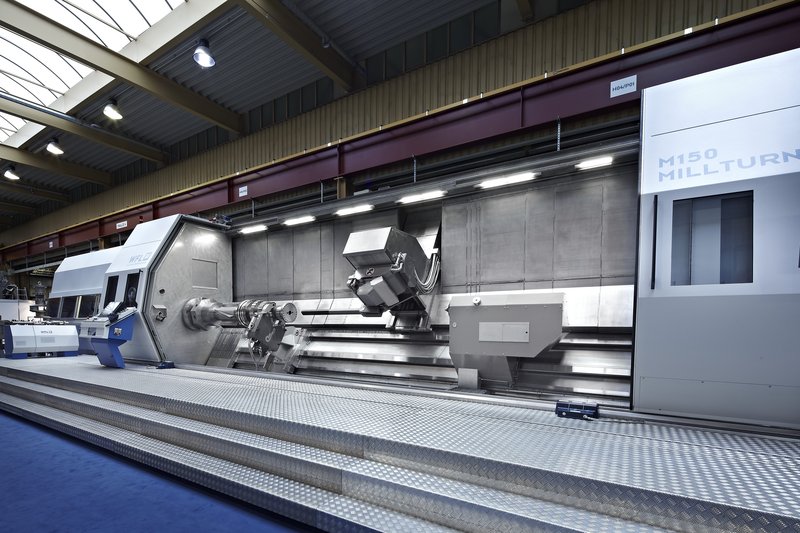

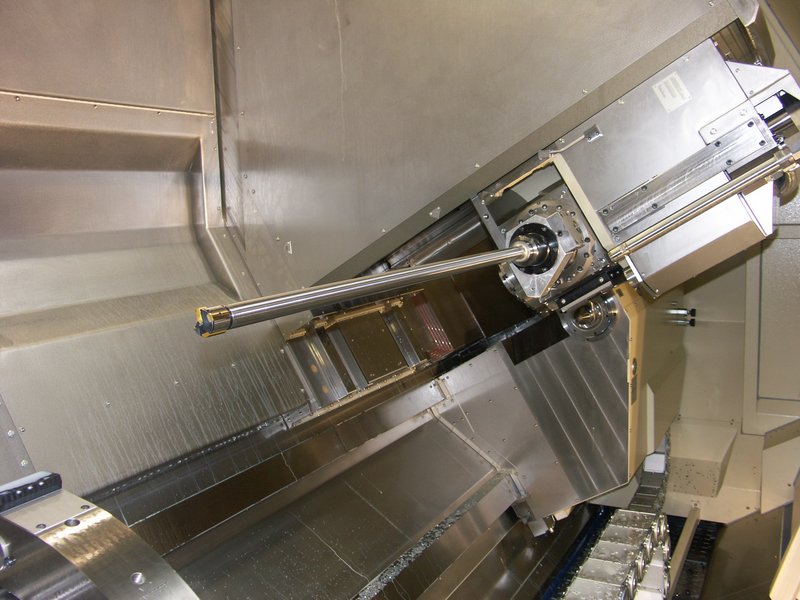
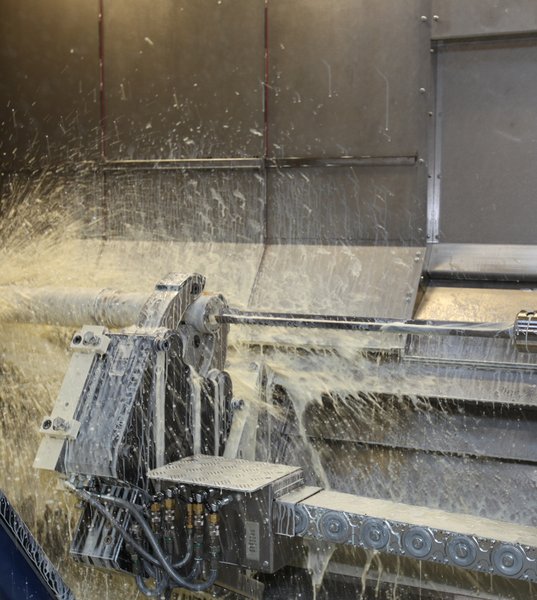
Our three-part feature entitled ‚Internal machining expertise of WFL‘ provides an overview of the following topics: deep hole drilling, boring, and bottle boring. The first part is concerned with the complex process for creating deep holes. WFL Millturn Technologies GmbH & Co. KG exploits all the benefits of complete machining for this type of work, setting new standards in terms of value for money and precision.
The most basic form of internal machining is drilling. Deep drilling is something of a special case, and is the subject of the first of this three-part feature. It is one of the special disciplines within the field of machining, particularly as these kinds of machining processes usually require special equipment in terms of both tools and machines. In drilling terms, holes with a diameter between 0.2 and 500 mm and a drilling depth typically greater than three times the diameter are generally considered to be 'deep' holes. At smaller drilling diameters, the length to diameter (L/D) ratio may be as high as ≤ 100 or even 400 in special cases, depending on the process and building material involved. At large diameters, the length to diameter ratio is mainly limited by the travel path of the machine or its bed length.
Special challenges call for special tools
The perennial challenges associated with deep drilling are how to introduce cooling lubricant to the cutting edge, how to remove swarf at a steady rate, and how to create the straightest possible hole. Various drilling tools have been developed over the years to suit different purposes. With deep drilling procedures, the drilling head next to the actual main cutting element (mostly an individual cutting edge or one made up of interchangeable cutting inserts) consists of a secondary cutting edge and additional guide strips. This arrangement ensures the drill bit is supported at the wall of the hole,
which increases accuracy and makes it easier to centre the drill bit during the process. The support provided to the drill bit also produces a smoothing effect, which improves the surface quality inside the hole.
Different processes
Deep drilling processes are divided into two main categories, depending on whether swarf is removed externally or internally. External swarf removal is mainly associated with single-lip and, more rarely, double-lip deep drilling, whereby cooling lubricant is introduced to the cutting edge via inlet holes in the drill bit and the swarf/cooling lubricant mixture is transported away along a V-shaped longitudinal groove in the tool. This process is typically used for drilling diameters between 0.5 and 40 mm. Spade drill bits are used for larger diameters, whereby a continuous cutting edge is formed at the front, generally using indexable cutting inserts. In such cases, the drill bit length is typically restricted to 12 x D.
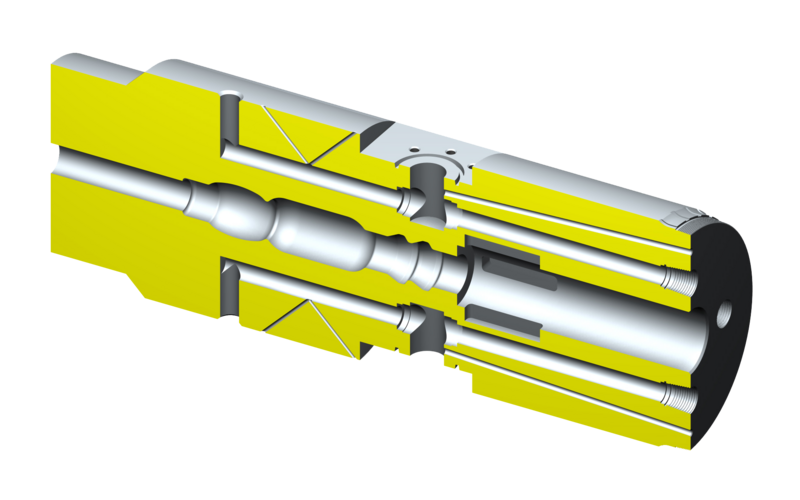
Another option, at drilling diameters of 16 mm and above, is the BTA process (Boring and Trepanning Association). This is one of the processes whereby the swarf/cooling lubricant mix is transported away internally. The advantage with processes where swarf is transported away internally is that outgoing swarf no longer comes into contact with the surface of the hole and therefore cannot damage it. Ejector drill bits, a special form of BTA bit, may be used at diameters of approximately 25 mm and above based on a two-pipe arrangement. These drill bits have additional cooling lubricant outlets around the edge of the drilling head, and some of the lubricant is fed directly into the internal pipe through a ring nozzle. This creates negative pressure in the front section of the drill bit, which accelerates removal of the swarf/coolant mixture.
Cost considerations
Deep holes represent a significant part of the machining work performed on many components manufactured with machining centres from Linz-based WFL Millturn Technologies GmbH & Co. KG. This is one of the main reasons why so much attention is devoted to this particular topic. 'In terms of the overall machining process for components, deep drilling is often seen as something of a hassle. Many companies do not have suitable machines and must outsource this machining process to someone else,' says Christian Jagersberger, Vice President of Sales at WFL, thereby explaining the special importance attached to the issue. 'It's not just the often lengthy delays until the workpiece comes back from the service provider, you've also got the extra set-up time and the inaccuracies associated with additional clamping.'
'It is hardly surprising that cost becomes an issue in cases where each component requires several deep holes,' adds Christian Jagersberger. 'Although you do get quite a lot of these holes, they mostly only take up a small amount of machining time on the whole. This is why many companies find it's simply not worth purchasing a separate machine for this purpose. And this is also where we come in, with the deep drilling capability integrated into our machining centres,' continues Jagersberger.
Integrated machining
With extremely deep holes or materials where machining is difficult, tool wear often requires that drilling is performed in stages using tools of different lengths but the same diameter. WFL Millturn machining centres offer decisive advantages as far as these kinds of machining processes are concerned. For one thing, the various drilling tools used can be stored and kept ready in the tool magazine, which minimizes clamping times while significantly improving positional accuracy. Not to mention the fact that genuine six-sided deep hole machining can only be performed during one clamping operation or two at the most.
The benefits are clear. Set-up times are reduced enormously and any finishing work due to deformation resulting from other work steps can be carried out immediately. Process steps can be carried out consecutively without having to compromise on accuracy.
Special monitoring cycles
WFL has also integrated a form of process monitoring for deep drilling into the machine control system, which makes it possible to determine process forces at an early stage of drilling and use this process data to monitor the remaining drilling depth. This is particularly important given the wide range of materials in the components to be processed, from simple steel to special alloys where machining can be difficult. This approach can ever deliver excellent drilling results, even for single holes, while using fewer resources during machining.
The benefits of lubrication
Another important consideration with deep drilling is the choice of cooling lubricant, as well as the operating pressures during the respective machining stage. These factors are critical to process reliability in terms of both machining and the surface quality of the holes.
Our machines are designed in line with individual requirements, whether emulsion, oil, or both these cooling lubricants are used during machining. This means we can cover all requirements within an operating pressure range of 10 to 350 bars and at a flow rate of 10 to 800 litres,' points out Koll, underlining what makes WFL machines so unique.
The full range of internal machining expertise
As well as satisfying the technical requirements associated with deep holes (such as the travelling steady rests already found in most machines), WFL also helps its customers come up with machining strategies. Comprehensive process expertise and suitable control mechanisms ensure drilling work is of a reproducibly high quality.