
Precision from the Black Forest – Kammerer Gewindetechnik relies on MILLTURN technology from WFL
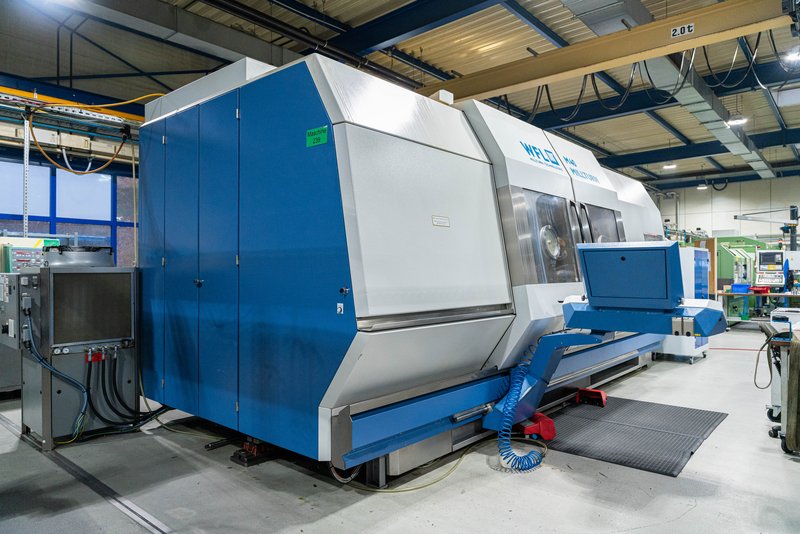
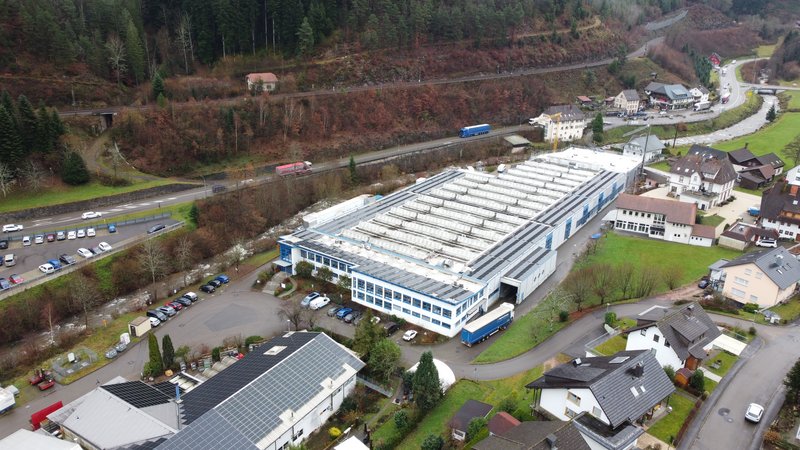
For more than 75 years, Kammerer Gewindetechnik GmbH & Co. KG from Hornberg-Niederwasser has stood for the highest precision in the conversion of turning to linear motion. The third-generation family business employs around 150 people and is one of the most sought-after experts in ball screw drives, linear guides and customised screw drives. Its components are found in sectors such as automotive engineering, medical technology, mechanical engineering and the packaging industry – wherever precise movements are essential. To ensure it can meet this standard in the long term, Kammerer has relied on MILLTURN technology from WFL for several years. Following excellent experiences with an M40 MILLTURN, the company decided to take the next step: investing in an M30-G, including automation and a storage tower.
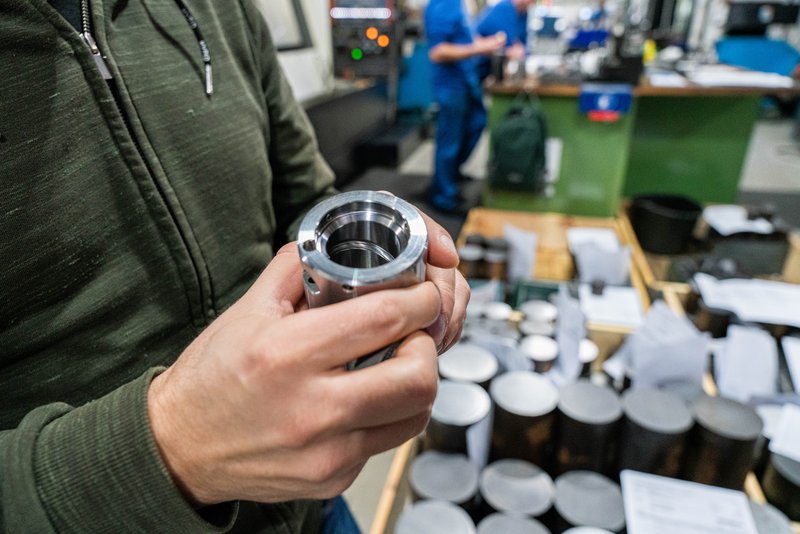
For Kammerer, the decision to opt for another MILLTURN from WFL was the result of many years of experience and clear technical requirements. In the manufacture of high-precision ball screw nuts, process reliability, repeatability and machine stability are crucial – factors in which WFL has consistently excelled for years. “Our ball screw nuts require extreme precision. The tolerance between the thread pitch and the deflection system in particular is a real challenge – here, hundredths of a millimetre determine whether a part works or is rejected,” says Martin Huber, Lean Manager at Kammerer.
The M40 MILLTURN, in use since 2021, had already demonstrated that even the most complex thread profiles and tight tolerances can be achieved with exceptional precision. Added to this is the holistic approach of WFL Millturn Technologies: machine and automation from a single source, which significantly simplifies integration and minimises risks. For Kammerer, this means: a single point of contact, a seamless system and maximum process reliability.
Complex machining process
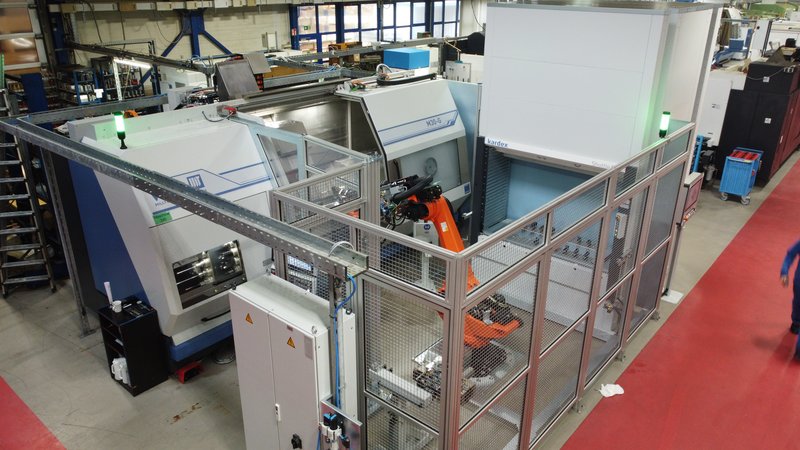
The ball nuts manufactured in the M30-G MILLTURN are predominantly made of 100CrMo7 or, in the food sector, of 1.4112 stainless steel. The application involves complex machining: first, the outer contour is machined, then a through-hole is drilled and a thread is cut. Pockets are then milled and edges deburred. Afterwards the outer contour is applied again and – depending on the design – a deflection system is installed. This is followed by drilling holes for connections and lubrication points. Finally, an articulated robot removes the workpiece, places it in the storage tower and inserts a new workpiece. The major challenge here is achieving the required accuracy of the thread pitch and deflection system. Tolerances of +/- 0.015 mm must be maintained across multiple layers.
Automation: Greater capacity, lower resource requirements
With the introduction of the M30-G, Kammerer has established a fully automated manufacturing process that contributes significantly to increased efficiency. The WFL machine is equipped with a Kardex storage tower capable of holding up to 300 workpieces across 28 shelves. When changing part types, which alters the dimensions of the raw and finished parts, an automatic jaw change on the main and counter spindles is carried out reliably.
This allows the entire machining process to be handled continuously and automatically from a quantity of 1. For a company that primarily manufactures batch sizes of between ten and 15 ball screw nuts, this flexibility is a decisive competitive advantage. The high process stability is also evident in the quality: with 600 parts now manufactured on the MILLTURN, there have been only six scraps – proof of the plant’s reproducible precision.
In practice, the plant’s potential is particularly evident: the M30-G can produce autonomously for up to 21 hours. “We have already run the plant independently once from 3 pm on Friday until midday on Saturday. The machine was switched off at midday on Saturday – who knows how long it would have continued producing,” emphasises Huber.
Thanks to automation, operators have additional capacity as they can simultaneously attend to other machines or processes. For Kammerer, therefore, automation means not only higher productivity, but also stability, predictability and the ability to deliver consistently high quality despite limited staff resources. Together, WFL technology and automation form the basis for reliable, future-oriented manufacturing that consistently meets customers’ high demands.
This is precisely where Kammerer benefits from the strengths of the MILLTURNs. Huber sums it up: “The WFL gives us the stability and accuracy that we wouldn’t otherwise achieve. Tools that don’t work on other machines run smoothly here.” This makes the M30-G the centrepiece of a flexible, high-precision production process.
Precision, stability and process reliability
Production is supported by a well-designed CAD/CAM setup. Kammerer programmes his workpieces using TopSolid, including post-processors for the MILLTURNs. On the M40 MILLTURN, just as on the M30-G MILLTURN, the WFL thread-cutting cycle is programmed, along with all standard conventional measuring cycles.
The fact that the decision to purchase once again fell on a MILLTURN is not only due to the outstanding performance of the M40 MILLTURN, but also to the synergy of the partnership. “It is excellent that we can place our process knowledge to use on this major project and that WFL brings its many years of experience in optimising processes to bear. It’s a wonderful synergy where everyone learns from everyone else,” says Martin Huber with conviction.
Equally noteworthy is the expert knowledge of WFL Customer Services. Kammerer praises the fast response times, expert solutions and rapid availability of spare parts – an aspect that can be crucial in day-to-day operations.
For Kammerer, this is a key element in being able to produce both customised one-off items and recurring series with consistently high quality – economically, reliably and sustainably. “In WFL, we have a reliable partner who understands our requirements – and with whom we will continue to grow in the future,” says Lean Manager Martin Huber.
The WFL-Kammerer cycle
Some of the ball screw drives manufactured are in turn used in WFL machines, such as recently in the M200 MILLTURN. These ball screw drives are characterised by a specially adapted pitch, which allows the use of a larger ball profile. This enables them to withstand higher axial loads within a compact installation space. The innovative design ensures performance, durability and, at the same time, space-saving. This makes the components suitable for demanding applications in machine tool manufacturing, where precision and load-bearing capacity are crucial.
Kammerer ball screws come into play during axis movement: they convert a rotational movement into a linear movement with zero play and high dynamics. The drive components must meet the highest standards of precision and speed. With repeatable accuracy and precision, they ensure the positioning accuracy of the axes and exact tool guidance, which is particularly important for complex milling or drilling operations. The high efficiency and low friction of the spindles ensure fast traverse movements whilst maintaining low energy consumption.
Sustainability – responsibility in action at Kammerer
At Kammerer, sustainability is not a trend, but a corporate practice that has been in place for many years. The focus is on the responsible use of resources – from production and Logistics Operations right through to internal processes. A key component is the consistent use of retrofit solutions: whether for machines, the storage system or the tool dispensing station. Software and control systems have been modernised.
In the energy sector, too, Kammerer focuses on long-term efficiency. A photovoltaic system, in operation for over 20 years and now generating around 100 kW, supplies large parts of the production facility with self-generated electricity. This is complemented by a comprehensive energy and environmental management system. The company has held environmental certification for over 10 years. Sensors monitor the consumption of every machine and every area to identify potential savings at an early stage. Peak loads – for example in summer – are automatically smoothed out by temporarily switching off systems such as the air conditioning or adjusting their output.
Sustainability is also evident in the day-to-day handling of materials: packaging cardboard is shredded on-site by a service provider, filled into bags and reused as packing material. Customers can also reuse this material, thereby closing loops and significantly reducing waste. At the same time, communication and documentation processes are being systematically digitised, which considerably reduces paper consumption.
Through this combination of technical modernisation, intelligent energy optimisation and resource-efficient processes, Kammerer succeeds in combining environmental responsibility with economic efficiency – and embedding sustainability permanently within the company.
Equally important: a modern and attractive working environment for skilled workers and apprentices. “Digitalisation and automation are crucial today for attracting and retaining good staff in the long term,” says Lean Manager Martin Huber with conviction.
The history of the Hornberg-based company
Founded in 1938 by Anna and Franz Kammerer, the company quickly became a pioneer. As early as 1946, Kammerer manufactured the world’s smallest watch movement, followed in 1962 by the first manual turning machine capable of thread whirling. In the decades that followed, the company increasingly specialised in threading technology, expanded its production facilities, professionalised manufacturing processes and established quality and environmental certifications (ISO 9001 since 1996, EMAS for over ten years).
Today, the production facilities cover more than 8,500 m². In 2014, the company opened a second production hall for its automotive division, and in 2017, it switched to line-oriented production with optimised material flow.
The appetite for investment remains strong: whether it’s overhead lines for coolant supply, software solutions or expansions of the production areas – Kammerer keeps moving forward.