
How Can the Next Generation Reindustrialize Europe?
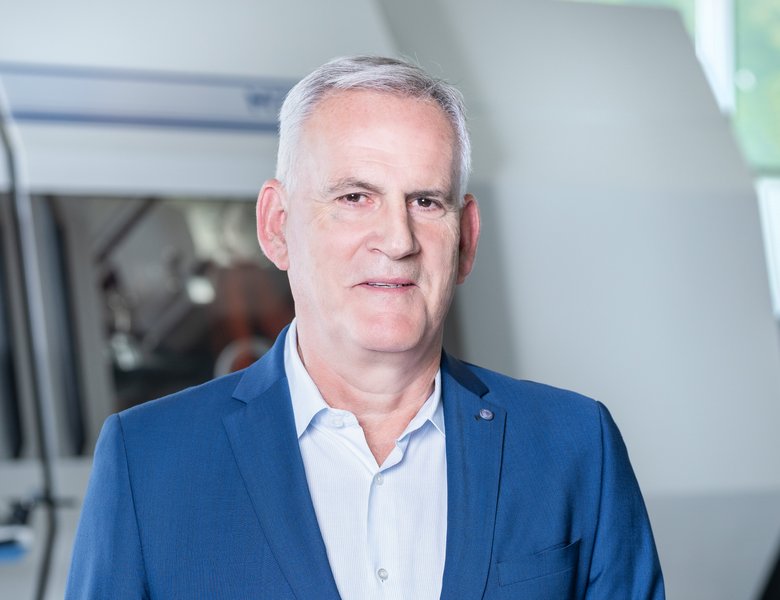

An interview with Günther Mayr, Chief Technology Officer of WFL, on the future of European industry.
For years, industry has struggled with an image problem. Many young people still associate it with difficult working conditions, outdated environments and repetitive tasks. Yet anyone stepping into a modern manufacturing facility today quickly discovers a very different reality.
Automation, intelligent software, simulation, robotics and process monitoring have transformed the factory floor. European manufacturing has never been more advanced. But according to Günther Mayr, Chief Technology Officer of WFL, technology itself is not the main issue.
After decades spent working alongside manufacturers around the world, he is convinced that the future of European production will depend above all on one often overlooked factor: the people who will operate these factories tomorrow.
At a time when Europe is seeking to strengthen its industrial sovereignty, attracting a new generation of talent has become just as important as developing the technologies that will power the factories of the future.
The Industry's Greatest Challenge Is Not Technological
When discussing the future of manufacturing, conversations almost always revolve around artificial intelligence, automation and digitalization. While these topics are important, Günther Mayr believes they are not the industry's most pressing challenge.
The real challenge is human.
Across Europe, an entire generation of manufacturing specialists is approaching retirement. Men and women who have spent thirty or forty years refining their expertise, solving complex production challenges and building an exceptional understanding of manufacturing processes.
The risk is not simply the loss of skills. It is the gradual loss of a significant part of Europe's industrial culture.
At the same time, companies are struggling to attract enough young people to take over. This creates a new challenge for manufacturers: how can they continue to increase production with fewer experienced people available?
For Günther Mayr, technology plays a critical role in addressing this issue. Not by replacing people, but by preserving knowledge, making it easier to transfer expertise and reducing the dependence of production processes on individual experience.
Building Workplaces That Attract Generation Z
Contrary to popular belief, the younger generation is not turning away from industry. It is looking for workplaces that are modern, attractive and technology-driven. For Generation Z, the quality of the working environment plays a decisive role in choosing an employer. Having grown up in a digital world, they expect intuitive technologies, greater autonomy and work that delivers tangible results. Modern manufacturing already offers many of these advantages, it simply needs to communicate them more effectively.
Today's production facilities bear little resemblance to those of thirty years ago. Operators work with highly sophisticated equipment, oversee automated systems and make decisions based on real-time production data.
At the same time, the rise of artificial intelligence is reshaping the employment landscape. While many office-based professions are questioning their future, technical and manufacturing careers are gaining renewed appeal.
Creating, building, producing and solving real-world problems remain highly valuable activities in an increasingly digital society.
For Günther Mayr, this shift represents a major opportunity for European industry. Young people are looking for tangible outcomes. They want to see the direct impact of their work. Producing a component destined for an aircraft, a power generation system or an advanced automotive application offers a level of satisfaction that few professions can match.
Today's operator is no longer simply executing tasks. Increasingly, they are becoming a production pilot, capable of managing and optimizing highly advanced technologies.
MASTER THE PROCESS: The Key to Europe's Reindustrialization
Recent crises, geopolitical tensions and growing concerns over sovereignty have placed industry back at the center of Europe's strategic priorities. The ambition to increase manufacturing capacity across the continent is real. However, this new wave of reindustrialization cannot rely on the models of the past.
Europe will never win a global competition based on labor costs alone. What it does possess is a tremendous advantage: technical expertise.
According to Günther Mayr, Europe's future competitiveness will depend on its ability to master manufacturing processes.
One statement frequently comes up in his discussions:
"The question is not how many machines a workshop owns. The question is how much real production capacity it can deliver."
« Today, you do not have to be the cheapest. You become the champion by producing the highest quality in small batch sizes, with the shortest lead time from order intake to the delivery of the finished part to the customer. »
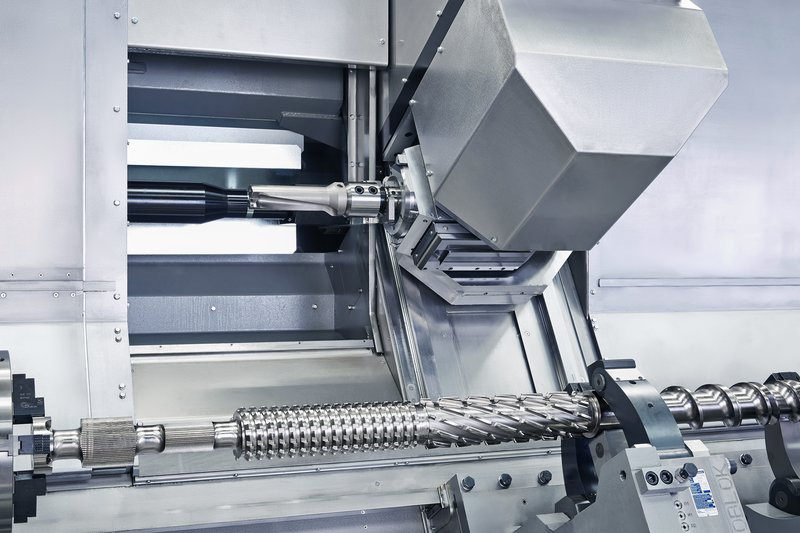
This philosophy has guided WFL for more than four decades through its "Clamp Once – Machine Complete" concept.
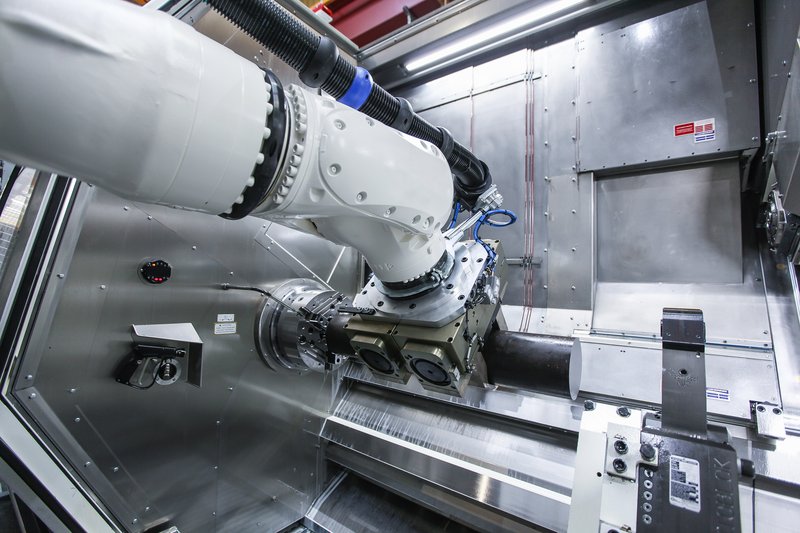
The principle is straightforward: perform as many machining operations as possible on a single machine and in a single setup. Fewer handling operations. Fewer transfers. Fewer risks. In industries where even a minor error can have significant consequences, this approach improves productivity, precision and reliability simultaneously.
Today, the real champion is not the company focused on a single industry, but the one with the flexibility to adapt to changing markets. The ability to shift from automotive, aerospace or oil & gas to defense, energy or space has become a key competitive advantage.
True manufacturing performance is not measured solely by cycle time. It is measured by the ability to produce the right part the first time and then reproduce that same result consistently, day after day.
Automation: The New Driver of Industrial Competitiveness
For Günther Mayr, automation is no longer primarily an innovation topic. It has become a competitiveness issue. The shortage of skilled labor, increasing production demands and growing pressure on delivery times are forcing manufacturers to rethink their production models.
In this environment, automation enables companies to make better use of existing resources, maximize machine utilization and secure manufacturing processes. Yet this is not about replacing people with machines.
The objective is to allow operators to focus on activities that create genuine value: analysis, decision-making and continuous improvement.
Repetitive tasks can be entrusted to systems capable of performing them with exceptional consistency and reliability. The result is not only higher productivity, but also improved working conditions and more attractive industrial careers.
Tomorrow's Industry Is Being Built Today
Throughout the discussion, one conviction emerges clearly.
The future of European industry will not depend solely on the technologies it develops. It will depend on its ability to transfer knowledge and attract a new generation of talent.
Artificial intelligence, automation and digitalization will undoubtedly transform manufacturing. But these technologies will only create value if they enable people to produce better, faster and with greater control.
This vision has guided WFL for decades. Long before Industry 4.0 and smart factories became industry buzzwords, the company was already promoting a simple idea: industrial performance is not achieved by multiplying equipment, but by simplifying processes, reducing risk and unlocking the full potential of production capacity.
For Günther Mayr, Europe's reindustrialization requires a partnership between the experience of previous generations and the energy of those now entering the workforce. The next chapter of European industry will not be written by technology alone, but by the people who choose to build, innovate and lead. Our challenge is to inspire the next generation to take up that responsibility.