
Work-Flow-Level: Reaching the Next Level Together


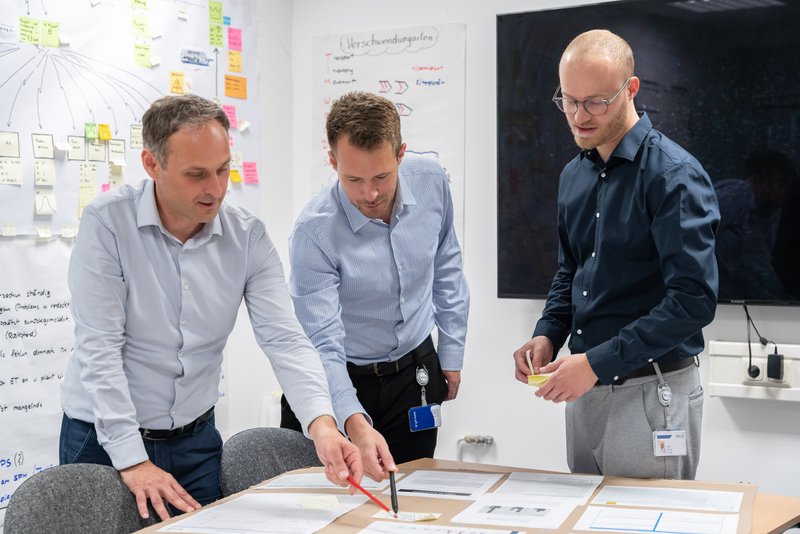
Work-Flow-Level—or WFL for short. These three letters represent far more than just a project name. For Bernhard Zipko, Head of Production, and Christoph Füreder, Corporate Development, Work-Flow-Level is a mindset: the ongoing commitment to scrutinize processes, identify opportunities, and get a little better every day. In an environment characterized by growing cost pressures, rising customer expectations, and ever-shorter delivery times, efficiency is becoming a decisive competitive factor. For a machine manufacturer like WFL in particular, this means implementing customized customer solutions faster and, at the same time, more cost-effectively. This is exactly where Work-Flow-Level comes in.
We spoke with Bernhard Zipko and Christoph Füreder about what this looks like in practice and why the topic is so important for WFL’s future.
Mr. Zipko, Mr. Füreder, what do you mean by the term “Work-Flow-Level”?
Bernhard Zipko: The name is intended to establish a clear connection to WFL. The three letters stand for more than just a title. “Flow” stands for material flow and efficient processes, while “Level” represents our commitment to continuously increasing the maturity of our processes, our productivity, and our output. It’s about reaching the next level.
Christoph Füreder: At the same time, Work-Flow-Level isn’t an initiative with a fixed start and end. Rather, it’s a mindset. We want to embed this concept in our corporate culture, our processes, and our daily work. The goal: higher productivity, shorter lead times, and an organization that keeps pace with the company’s growth.
Why is this topic becoming increasingly important today?
Füreder: Competitive pressure is enormous. Especially in high-wage countries like Austria, rising costs cannot simply be passed on to customers. At the same time, our customers expect increasingly customized machines with ever-shorter delivery times. This forces us to continuously optimize our processes.
Zipko: Those who work more efficiently can deliver faster and remain competitive. Work-Flow-Level is therefore not only a driver of productivity but ultimately also of customer satisfaction and business success.
What role does Work-Flow-Level play in WFL’s development?
Zipko: WFL has grown significantly in recent years. With this growth, the demands on processes and organization are also changing. Workflows that functioned just three years ago are now reaching their limits.
Füreder: That’s why it’s no longer enough to just work within the system. We also have to work on the system itself. Work-Flow-Level helps us adapt structures and processes to the demands of the future.
Can you give some specific examples?
Zipko: A key tool is our shop floor management. Regular meetings bring progress, deviations, and challenges to light. The focus is on the questions: Did we achieve our daily target yesterday? If not, what obstacles were there? How can we quickly correct them, and what steps will we take to prevent them from recurring? This transparency enables us to identify root causes and implement targeted improvements.
Here’s an example from assembly: By reorganizing certain work steps and performing parallel pre-assembly of subassemblies, we aim to reduce lead time by up to 25 percent. At the same time, this creates clear and concise work tasks that make it easier for new employees to get up to speed and accelerate the learning process.
Füreder: Another project focuses on the quality of parts supplied by vendors. Together with suppliers, we’ve introduced standardized checklists to prevent errors early on. This reduces complaints, cuts down on wait times, and eases the workload on our employees.
Many improvements affect multiple departments at the same time. What are the biggest challenges here?
Füreder: The biggest challenge is often establishing a shared understanding. Each department views an issue from its own perspective. That’s why we need to involve employees, explain the background, and define common goals.
Zipko: As soon as everyone understands why an issue is important and what contribution they can make, very good solutions emerge. Improvement only works when we work together.
So does “workflow level” only apply to production?
Zipko: Quite the opposite. Many issues extend far beyond production. A good example is the concept of “order clarity.” If three people interpret this concept differently, unnecessary friction arises. That’s why we’re working to define processes and responsibilities more clearly across departmental boundaries. Because only when everyone pulls in the same direction can the entire value stream function optimally.
Füreder: Service, purchasing, engineering, and sales also play an important role—every single department in this company. Ultimately, the goal is to optimize the entire value stream, not just individual areas.
How important are employees to the success of Work-Flow-Level?
Füreder & Zipko: The most important factor for success is the employees. They know their processes best and are the first to recognize where improvements are possible. That’s why Work-Flow-Level deliberately focuses on engagement, appreciation, and collaborative learning to identify where waste is hidden in the system.
How do you ensure that changes are accepted and supported by the teams?
Füreder: Acceptance of change arises above all when employees recognize the concrete benefits for their day-to-day work. An employee on the shop floor wants a workday where processes run smoothly, unnecessary disruptions are avoided, and they can focus on their actual, value-adding work. No one wants to be regularly pulled out of the standard process by complaints, missing information, or unplanned problems.
That’s why we communicate changes in a very practical way: Our goal isn’t to create additional work, but to remove obstacles. We want to ensure that employees don’t have to constantly run to their supervisor because of problems, but can instead perform their core tasks efficiently and with the right level of focus. This creates a workflow (“flow”) that increases both productivity and satisfaction.
Zipko: Generally speaking, we find our employees to be open-minded, curious, and willing to explore new approaches to achieve our goals. Quick and visible successes demonstrate that a change truly helps. Less time spent searching for materials, better organization, clearer priorities, or fewer disruptions significantly increase the willingness to participate. At the same time, there is often an expectation that improvements will deliver immediately visible results. Here, it’s important to foster an understanding that sustainable changes take time and are a continuous process.
Especially when dealing with stubborn issues, a certain degree of experimentation and trial and error is often necessary. Once the experiment has succeeded and a new standard has been defined, it’s important to ensure its implementation through regular process validation by all involved parties.
Füreder & Zipko: Another key success factor is cross-departmental collaboration. Particularly when it comes to production planning and control, production, administration, and order management must work together in a closely integrated manner. Start dates, schedule changes, missing parts, or last-minute customer requests can only be successfully managed if information is exchanged transparently and there is a shared understanding of the challenges facing each department. That is why we actively promote communication across departmental boundaries and work to break down silos. When all stakeholders understand the interconnections and work together on solutions, not only does acceptance of change increase, but ultimately so does the ability to reliably meet customer requirements and sustainably improve customer satisfaction.
What skills will be particularly important in the future?
Füreder: Two things are crucial. First: focusing on customer value. In lean management, anything that doesn’t create direct customer value—or that the customer isn’t willing to pay for—is waste. Every activity should contribute to value creation.
Zipko: And second, we often have to “learn to see” again in our established routines in order to consciously recognize waste. Inefficient processes have often become the norm over the years. If you look closely, you’ll discover plenty of potential for improvement.
In closing: What does the ideal workflow level of the future look like?
Füreder: It’s actually quite simple: a never-ending process of continuous improvement.
Zipko: There will never be perfect processes. But we can work every day to get a little better. That’s exactly what workflow level is all about.
And what advice would you give to other companies?
Zipko: Better to start today than tomorrow—but above all: just start!
Füreder: Process improvement is always the right approach. The key is to stay committed and embed improvements sustainably. Because that’s where the real challenge lies.